
 Português
 English
 Español
 Русский
 Bahasa Indonesia
 اردو
اردو English (NG)
 বাংলা
বাংলা Español (MX)
 Tiếng Việt
 日本語
日本語 한국어
한국어 العربية
 Bahasa Melayu
 English (SG)
 Filipino
 ไทย
ไทย
- Home
- Product
- Latas Metálicas Impressas Personalizadas
- Lata Redonda Personalizada Lata Vazia Lata
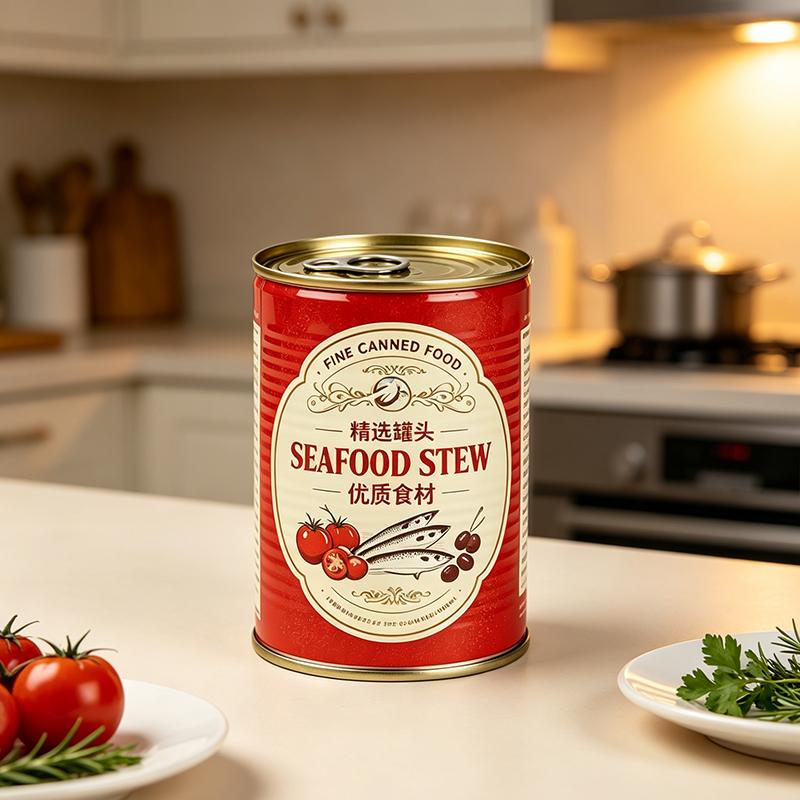
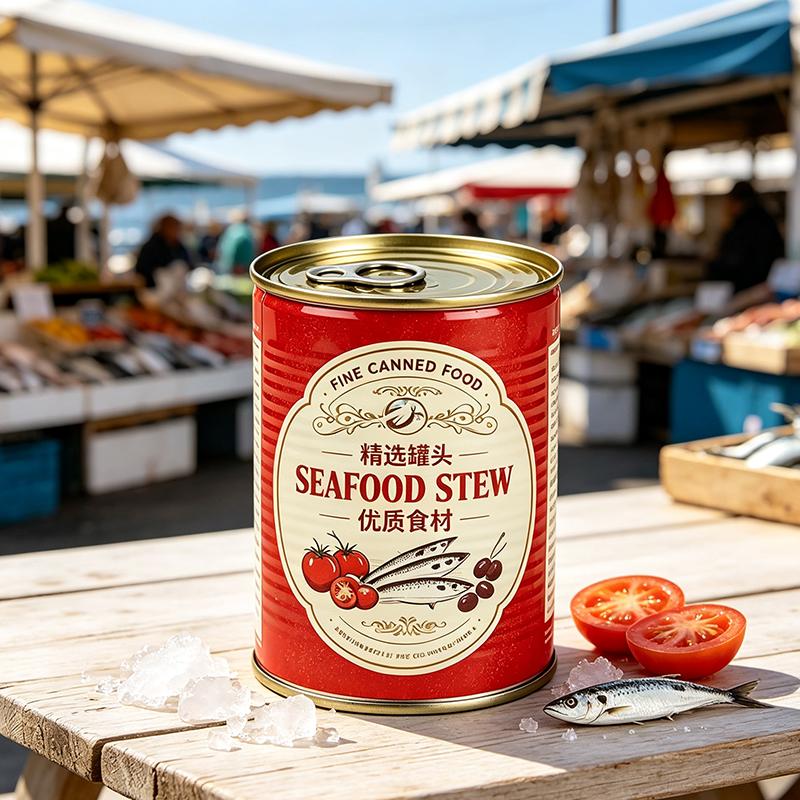
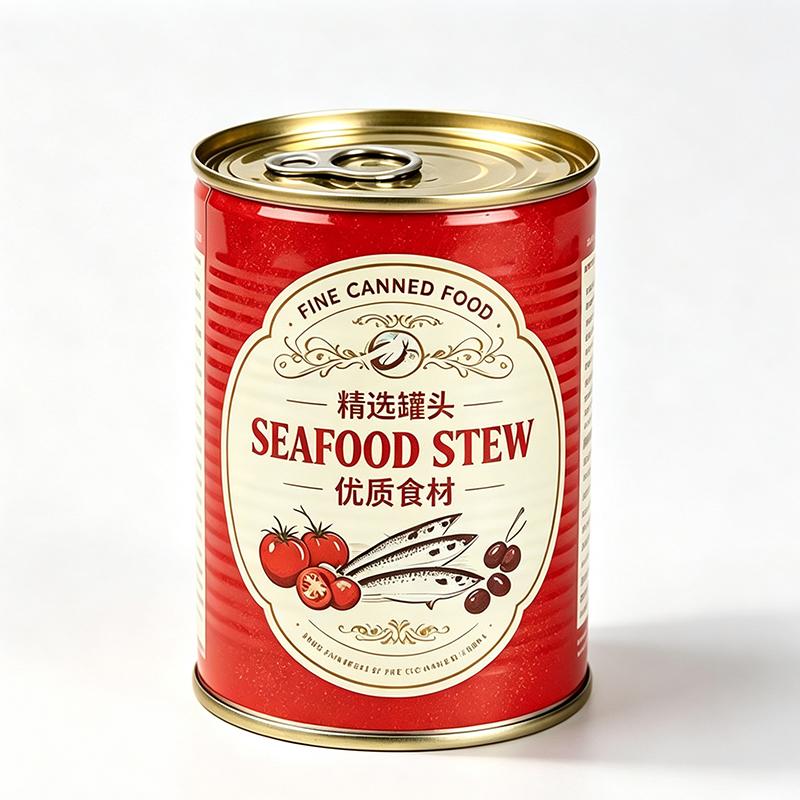
Lata Redonda Personalizada Lata Vazia Lata
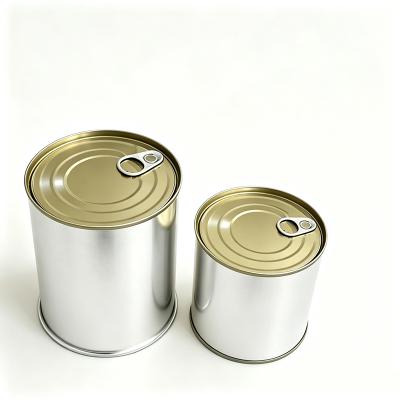
Specialized Packaging Solutions for Complex Seafood Formulations—Our production facilities manufacture premium cylindrical steel cans designed specifically for complex, multi-ingredient soup bases and seafood stews. Developed to meet the rigorous storage standards of commercial processors, this container series features advanced metal barrier properties aimed at preserving the freshness, color, and rich flavor profiles of oily fish stews, bouillabaisse, and premium seafood purees.
Technical Parameters and Specifications
Base Material: Premium electrolytic tinplate (ETP) with uniform tin coating.
Can Structure: Three-piece welded side-seam design featuring parallel horizontal reinforcing ribs.
Closure: Full-aperture Easy-Open End (EOE) with precision scoring.
Internal Coating: Dual-layer system—grease-resistant organosol over a gold phenolic lacquer base.
Suitable Contents: Thick soups, seafood stews, oily fish broths, and tomato-based sauces.
Heat Resistance: Structurally stable; tested to withstand 121°C retort (pressure sterilization) conditions.
Global Compliance: Fully compliant with FDA, BRCGS, and ISO quality certification standards.
Application Advantages
1. Dual-Layer Coating: Resistance to Fats and Organic Acids
Premium seafood stews often contain natural marine proteins, fats, and acidic ingredients like tomato puree. To withstand this complex chemical environment, our cans feature a dual-layer protective lining. This chemical barrier effectively prevents fat absorption and acid-induced corrosion, thereby avoiding issues such as sulfide staining or tin leaching during long-term storage.
2. Precision Seaming and Liquid Repair Strip
The cylindrical body utilizes a precision seaming process and a continuous high-frequency welded side seam. Each weld is treated with a precision-sprayed liquid repair strip. This seamless reinforcement process ensures the can remains intact during the intense vacuum fluctuations associated with hot filling and high-pressure sterilization, preventing structural micro-leaks. 3. Horizontal Body Ribs: Thermal-Vacuum Stability
Thick soups undergo rapid pressure fluctuations during the cooling cycle of commercial retorts. This can design features optimized horizontal circumferential ribs on the exterior wall. This structural design significantly enhances the can's resistance to horizontal compression, effectively preventing wall collapse or deformation and ensuring the product maintains an attractive appearance on supermarket shelves.
FAQ
Q1: Can these soup cans withstand automated filling nozzles used for high-viscosity products?
A1: Yes. The uniform rim tolerance and structural rigidity surrounding the wide-mouth opening ensure stable positioning beneath heavy-duty industrial piston or volumetric pumps, thereby eliminating spillage and maintaining high operational efficiency in the filling plant.
Q2: Do you offer custom internal coatings that comply with strict global food safety regulations?
A2: Certainly. We provide advanced "BPA-NI" (Bisphenol A Non-Intentionally Added) internal coating solutions that fully comply with current US FDA and EFSA standards for direct food-contact packaging.
Q3: What is the typical Minimum Order Quantity (MOQ) for custom-printed seafood stew cans?
A3: For custom multi-color offset-printed cans of this type, our standard B2B MOQ is 50,000 units. For standard plain (silver or gold) unprinted cans, we can offer more flexible trial-run arrangements to support initial production phases.
Q4: How do you protect bulk shipments from marine humidity and damp environments?
A4: To ensure safe delivery, empty cans are automatically nested and stacked on heavy-duty, fumigation-free pallets with moisture-proof protective layers. They are then secured with industrial nylon strapping and fully wrapped in heavy-gauge stretch film containing specialized desiccant packs to prevent moisture buildup caused by condensation in salty, humid air.
© 2026 Xiamen Jianyida Industry & Trade Co., Ltd. Todos os direitos reservados E-mail:lisa@gradetincans.com Whats app:+86 17759214359