
 English (NG)
 English
 Español
 Русский
 Português
 Bahasa Indonesia
 اردو
اردو বাংলা
বাংলা Español (MX)
 Tiếng Việt
 日本語
日本語 한국어
한국어 العربية
 Bahasa Melayu
 English (SG)
 Filipino
 ไทย
ไทย
How to Choose the Right Tinplate Cans for Pet Food?
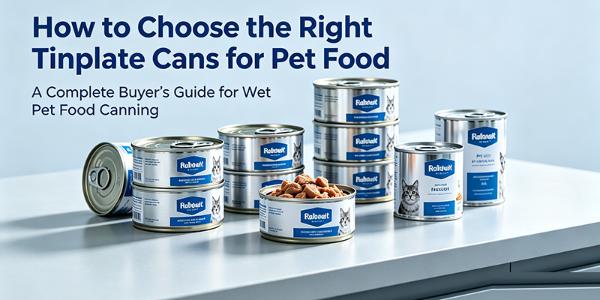
Packaging is one of the most critical factors that determine the safety, shelf life, and market competitiveness of pet food products. For wet pet food, canned treats, and sterilised pet diets, high-quality tinplate cans remain the most reliable packaging solution worldwide. However, not all tinplate cans are suitable for pet food canning. Choosing the wrong can type, coating, or specification can lead to sulphur staining, internal corrosion, seal failure, short shelf life, and even food safety risks that damage brand reputation.
This professional guide explains every key factor for pet food manufacturers and brand owners to select the right tinplate cans, covering material grade, internal lining, retort resistance, can structure, certification, customisation, and bulk wholesale standards.
1. Match Can Type to Your Pet Food Formula
Pet food categories require different tinplate can structures, mainly divided into2-piece DRD cans and 3-piece welded cans. Matching the can style to your product type is the first step to avoid packaging defects.
2-Piece DRD Tinplate Cans
Seamless one-piece body structure with no welding seam, providing excellent pressure resistance and tight sealing performance. This type is the mainstream choice for wet dog food, wet cat food, and high-moisture pet cans. It effectively prevents liquid leakage and bacterial contamination during high-temperature retort sterilisation and long-term storage.
3-Piece Welded Tinplate Cans
Composed of a welded body, top lid, and bottom base. It features flexible size options and cost advantages, ideal for dry pet food, pet treats, semi-moist pet snacks, and medium and low-temperature sterilisation products.
2. Prioritize BPA-Free Food-Grade Internal Coating
Pet food is rich in protein, fat, and trace acids, which easily cause chemical reactions with bare tinplate surfaces. A qualified internal lining is the core guarantee of food safety and product stability.
Always choose BPA-free food-grade epoxy-phenolic lacquer for pet food cans. Traditional BPA-containing coatings may release harmful substances under high-temperature sterilisation or long storage, threatening pet health and failing international food safety inspections.
Professional pet food tinplate cans adopt customised lining formulas: acid-resistant coatings for high-acid pet food recipes and sulphur-resistant coatings for high-protein meat-based pet food, which perfectly avoid sulphur staining, black spots, and internal corrosion problems.
3. Confirm Retort-Safe Performance for Sterilization
Almost all canned wet pet food requires high-temperature retort sterilisation (121°C–135°C). Ordinary tin cans cannot withstand continuous high-temperature and high-pressure environments, which will cause coating peeling, can body deformation, and seal cracking.
Qualified pet food tinplate cans must support industrial retort processing. We strictly select T3–T4 grade tinplate materials with stable hardness and ductility, which maintain structural integrity and coating adhesion after repeated high-temperature sterilisation, ensuring a 24–36 month long shelf life for pet food products.
4. Select Appropriate Tinplate Grade and Thickness
Tinplate temper grade and coating weight directly determine the durability and production yield of pet food cans.
For standard wet pet food canning, T3–T4 temper tinplate is the most suitable option, balancing hardness and formability to avoid cracking during high-speed production and sealing. For ultra-thin or oversized pet cans, customised BA/CA tinplate with differential tin coating is available to enhance anti-corrosion performance.
The conventional thickness of pet food tinplate cans ranges from 0.22 mm to 0.30 mm. Thicker materials are recommended for large-capacity pet wet food cans to resist extrusion and deformation during transportation and stacking.
5. EOE Lid Sealing and Size Customisation
Consumer experience and production efficiency depend on lid design and size matching. Most premium pet food brands choose EOE easy-open lids, which are convenient for daily opening and improve product market competitiveness.
6. Verify International Food Safety Certifications
For pet food products exported to Europe, America, Southeast Asia, and other global markets, packaging cans must comply with international food contact safety standards.
Reliable pet food tinplate can manufacturers must provide FDA, REACH, and food-grade contact certifications. All our tinplate cans are strictly tested to ensure no harmful substance precipitation, fully meeting global pet food export inspection requirements and helping brands avoid market access risks.
7. Custom Printing and Brand Packaging Solutions
Exquisite can body printing is an important part of pet food brand shaping. Empty plain cans can only meet basic packaging needs, while customised offset printing, matte/glossy surface finishing, and brand logo embossing can greatly improve shelf display effects and product premium sense.
We support full OEM/ODM customisation, including personalised patterns, brand logos, product ingredient information, and multi-language printing. Whether for high-end premium pet food or mass-market wholesale products, we can provide matched packaging design and production solutions.
8. Wholesale and OEM Order Considerations
For pet food processing factories and brand sellers, stable supply and cost-effective bulk orders are key to long-term cooperation. When selecting a tinplate can supplier, focus on factory strength, delivery cycle, and flexible MOQ support.
As a professional pet food tinplate can manufacturer, we support small-batch trial orders and large-scale bulk wholesale, providing one-stop services from sample confirmation, mould opening, customised production to global shipping. Factory direct sales effectively reduce intermediate costs and help customers improve product profit margins.
FAQs About Pet Food Tinplate Cans
Q1: Are tinplate cans better than aluminium cans for pet food?
Yes. Tinplate cans have stronger high-temperature resistance and structural stability, more suitable for retort sterilisation of wet pet food. They feature better anti-corrosion performance and longer shelf life, making them the mainstream choice for mid-to-high-end canned pet food.
Q2: Are your pet food tin cans BPA-free?
All our pet food tinplate cans adopt BPA-free food-grade internal lacquer, fully compliant with international safety standards, safe for long-term contact with pet food.
Q3: Can you customise sizes and printing for pet food cans?
We provide full customised services, including can size, thickness, surface finishing, logo printing, and packaging style, supporting personalised OEM and ODM orders for global pet food brands.
Final Thoughts
Choosing qualified tinplate cans for pet food is not only a packaging choice but also a key guarantee for product safety, shelf life, and brand credibility. Focus on food-grade materials, retort safety, anti-corrosion coating, formal certification, and customised services to select the most suitable packaging solution for your pet food products.
If you are looking for reliable wholesale pet food tinplate cans, feel free to send us your size, printing, and quantity requirements. We will provide professional packaging solutions and factory-direct competitive quotations within 24 hours.