
 বাংলা
 English
 Español
 Русский
 Português
 Bahasa Indonesia
 اردو
 English (NG)
 Español (MX)
 Tiếng Việt
 日本語
 한국어
 العربية
 Bahasa Melayu
 English (SG)
 Filipino
 ไทย

The B2B Procurement Guide to Sourcing Retort-Safe Empty Tin Cans for Wet Pet Food Canneries in Southeast Asia
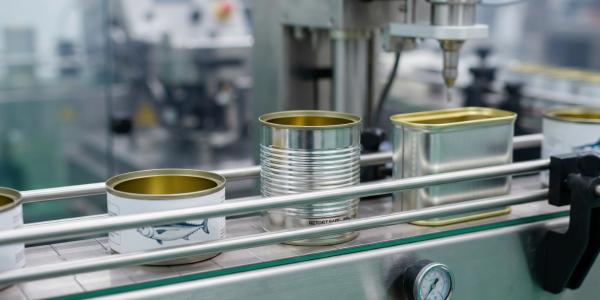
The global wet pet food manufacturing sector is experiencing an unprecedented surge in demand, shifting its core OEM and ODM production hubs heavily toward Southeast Asia—specifically Thailand (Bangkok/Laem Chabang) and Indonesia (Jakarta/Surabaya). As international premium pet food brands migrate their supply chains to these regions, local processing plants face increasingly strict quality and compliance mandates from global regulators like the US FDA and European EFSA.
When packaging high-end wet cat food, dog food, or nutrient-dense animal pastes, choosing the right empty metal containers is no longer just a standard purchasing decision. It is a critical safeguard for product integrity. For automated filling lines operating in Bangkok or Jakarta, sourcing commercial-grade, retort-safe 3-piece and 2-piece tinplate cans is the absolute industry baseline to prevent catastrophic seaming failures and costly overseas cargo rejections.
Below is an engineering and procurement guide on how to evaluate empty tin cans that meet rigid international export compliance.
1. The Retort Autoclave Challenge: Mitigating Buckling and Panel Denting
Unlike dry kibble packaging, wet pet food formulations must undergo a rigorous, high-pressure post-sealing thermal sterilization process—commonly known as retort processing (typically at 121°C / 250°F or higher). During this intense thermal cycle, the extreme pressure differential inside the retort autoclave can destroy inferior metal structures.
If the empty tinplate thickness is inconsistent or the tempering is sub-standard, the can body will succumb to two common structural failures:
- Structural Buckling: A catastrophic implosion where the can body collapses inward during the high-pressure vacuum cooling phase.
- Severe Panel Denting: Micro-deformations along the sidewalls that compromise the hermetic seal of the double seam, leading to invisible micro-leakage and microbial spoilage weeks later.
- Engineering Solutions for High-Volume Canneries
- To overcome intense retort pressures, automated production lines utilize specific structural profiles:
- The Heavy-Duty Ribbed Series: Engineered with precision deep-beaded wall patterns (either full-body ribbing or dual-zone center beading). This design dramatically reinforces the container's radial and vertical crush strength, keeping the can perfectly cylindrical under extreme vacuum cooling.
- Consistent Tinplate Gauge: Top-tier packaging suppliers source high-tensile tinplate from world-class mills (such as BAO STEEL or SHOUGANG), ensuring uniform gauge distribution across millions of empty units to eliminate weak stress points.
2dvanced Internal Coatings: Eliminating "Sulfur Staining" in High-Protein Recipes
Premium pet food formulations are heavily protein-reliant, frequently utilizing salmon, tuna, mackerel, poultry, and meat by-products. During high-temperature retort cooking, these natural proteins degrade and release highly reactive sulfur compounds.
If raw tinplate comes intoect contact with these compounds, a chemical reaction occurs, resulting in sulfur staining—an unsightly blackening of the inner can wall. While non-toxic, cosmetic interior blackening triggers immediate quality rejections from premium international brands and consumers.
To guarantee complete chemical isolation, your empty 3-piece and 2-piece metal cans must feature tailored internal lining technologies:
- Gold Lacquer & Aluminum Paste: Formulated specifically for high-protein meat and fish recipes to capture and resist sulfur ions, eliminating interior staining entirely.
- Anti-Acid Organosol & White Linings: Vital for pet food recipes incorporating acidic elements, specialized gravies, or tomato-based stews, protecting the steel core from low-pH corrosive penetration.
- 100% BPA-Free Compliance: To satisfy global food safety protocols, all internal coatings must be completely free of Bisphenol A (BPA-Free), meeting the strict food-contact material regulations of the FDA and European Union.
3. Structural Choice: 2-Piece Seamless vs. 3-Piece Welded Tin Cans
Optimizing line efficiency is everything in highly competitive Southeast Asian manufacturing landscapes. Empty tin cans must interface seamlessly with high-speed automated filling nozzles and double-seaming machinery. Canneries must deploy the correct format based on their specific OEM runs.
2-Piece Seamless Cans (DRD / DWI Technology)
Manufactured from a single flat metal blank using advanced deep-drawing or draw-and-ironing technologies, the base and vertical sidewalls are stamped seamlessly into an integrated cup shape.
- The Seamless Advantage: By completely eliminating the vertical side seam and the bottom seam, 2-piece cans remove the two most common failure points for leaks.
- Best For: Standardized high-volume runs, lightweight material efficiency (reducing raw material usage by up to 40%), and ultra-high-speed filling lines running at up to 2,000+ cans per minute. Highly suited for 85g and 170g round cat food cans or classic 1/4 Club seafood profiles.
- 3-Piece Welded Tin Cans
- Consisting of three separate components—a rectangular rolled tinplate sheet formed into a cylindrical or rectangular body, a bottom end mechanically double-seamed onto the body, and a top lid attached after product filling. The vertical seam is closed via high-precision electric resistance welding.
- The Customization Advantage: 3-piece cans excel in shape and dimensional versatility. Production lines can easily adjust can heights, body profiles, and cross-sections with significantly lower upfront tooling costs.
- Best For: Flexible OEM/ODM production batches, heavy-duty stacking logistics, and irregular geometries such as rectangular luncheon meat tins or trapezoidal configurations.
4. Closure Integrity: High-Precision EOE and Wide-Mouth Layouts
The interface between the empty can rim and the closure dictates both the filling efficiency and the end-consumer experience:
- Wide-Mouth Squat Profiles: For chunk meats, thick seafood blocks, or highly viscous pet food stews, a wide-aperture can is preferred. It allows automated filling nozzles to deposit product cleanly, minimizing rim contamination that could otherwise compromise double-seam integrity.
- Easy-Open Ends (EOE Ring Pulls): Scored lids provide tool-free convenience for pet owners. The score-line depth must be micro-engineered to pull open effortlessly while remaining rigid enough to prevent premature bursting during the retort sterilization phase.
- Standard Sanitary Plain Lids: Favored for bulk catering sizes or heavy-duty logistics where maximum joint stiffness is required under extreme cargo weight stacking.
5. Establishing a Reliable B2B Sourcing Partnership in Asia
Navigating cross-border logistics and international quality standards for empty metal packaging requires an experienced industrial manufacturing partner. Xiamen Jianyida Industry & Trade Co., Ltd. delivers fully customizable, food-grade tinplate packaging solutions engineered specifically for high-pressure retort environments.
Xiamen Jianyida Industry & Trade Co., Ltd. implements rigorous quality controls, including online leak detection and pressure testing, to help canneries in Southeast Asia and global markets reduce packaging costs while ensuring food safety. Custom offset lithographic printing provides sharp branding.
Get a Tailored Technical Proposal
Contact the technical support team for formal quotations, coating data, and sample testing:
- 📧 Email: lisa@gradetincans.com
- 💬 WhatsApp: +86 17759214359
- 🌐 Official Website: gradetincans.com